
January 18, 2026
From Overhead to Growth Engine: Mastering White Label Partnerships for Agency Profitability

The Agency Growth Paradox
Most agency owners face the same brutal ceiling: every new client win should feel like progress, but instead it brings chaos. The math seems simple. More clients equals more revenue. Yet the reality is messier, because adding clients means scrambling to hire, stretching existing teams thin, watching profit margins compress, and discovering that growth often creates more problems than it solves.
This is the traditional scaling trap. Agencies hire more people to handle more work, which increases operational costs and overhead, and those higher costs eat into margins, forcing the agency to chase even more clients to stay profitable. According to industry data, the average agency running traditional scaling models faces monthly operating costs around $635,000, much of it locked into fixed payroll and infrastructure.
But 2026 has revealed a different path. The white label partnership market has grown to $99.19 billion, not because it is a shortcut or cost-cutting hack, but because it solves the agency growth paradox at its core. Agencies using white label partnerships strategically grow 2.3 times faster than those scaling purely through hiring, and they retain clients at a rate 42% higher than their traditionally-scaled competitors.
These are not marginal improvements. They represent a fundamentally different approach to building agency capacity. White label partnerships multiply what your agency can do, expand service offerings, and preserve the culture and client relationships that made you successful in the first place. When integrated correctly, white label partners become invisible capacity extensions, not replacements for your team or compromises on quality, and the agencies winning in 2026 understand this distinction.
Why Traditional Scaling Models Break
The "hire-to-scale" model looks logical on paper: land more clients, hire more people, deliver more work, and collect more revenue. But this linear equation collapses under its own weight faster than most agency owners expect.
When agencies scale through hiring alone, monthly operating costs balloon to an average of $635,000, with the majority locked into fixed payroll obligations that don't flex with revenue fluctuations. This creates a financial trap where agencies must constantly chase new business just to cover overhead, turning growth into a treadmill rather than momentum.
The expertise gap compounds the problem. Clients demand specialized skills in SEO, PPC, content strategy, and automation, but hiring dedicated specialists for each discipline inflates headcount unsustainably. A 15-person agency trying to offer full-service capabilities would need to double its team, yet still lack depth in emerging areas like AI integration or omnichannel strategy.
Culture Erosion
Even more damaging is culture dilution. The scrappy, client-focused identity that made the agency successful in the first place gets lost in the bureaucracy of rapid hiring, onboarding cycles, and layered management structures. What started as a tight team that moved fast and cared deeply becomes a bloated organization where people don't know each other's names.
The financial consequences are stark. Agencies that scaled traditionally saw profit margins compress to 8-12%, while those adopting white-label partnerships maintained margins of 18-22%. That margin differential means the difference between surviving and thriving, between reinvesting in growth and merely treading water. White-label adopters also achieve 32% higher ROI compared to traditional scaling models, proving that the partnership approach delivers superior financial performance.
There's a better architecture for growth, one that decouples revenue expansion from headcount inflation and preserves what made your agency valuable in the first place.
White Label as Growth Lever
White label partnerships are strategic tools that multiply what your agency can do without adding staff. This changes the entire game, because instead of hiring more people every time you want to grow, you plug in specialized partners who handle specific work while you focus on clients, strategy, and what makes your agency unique.
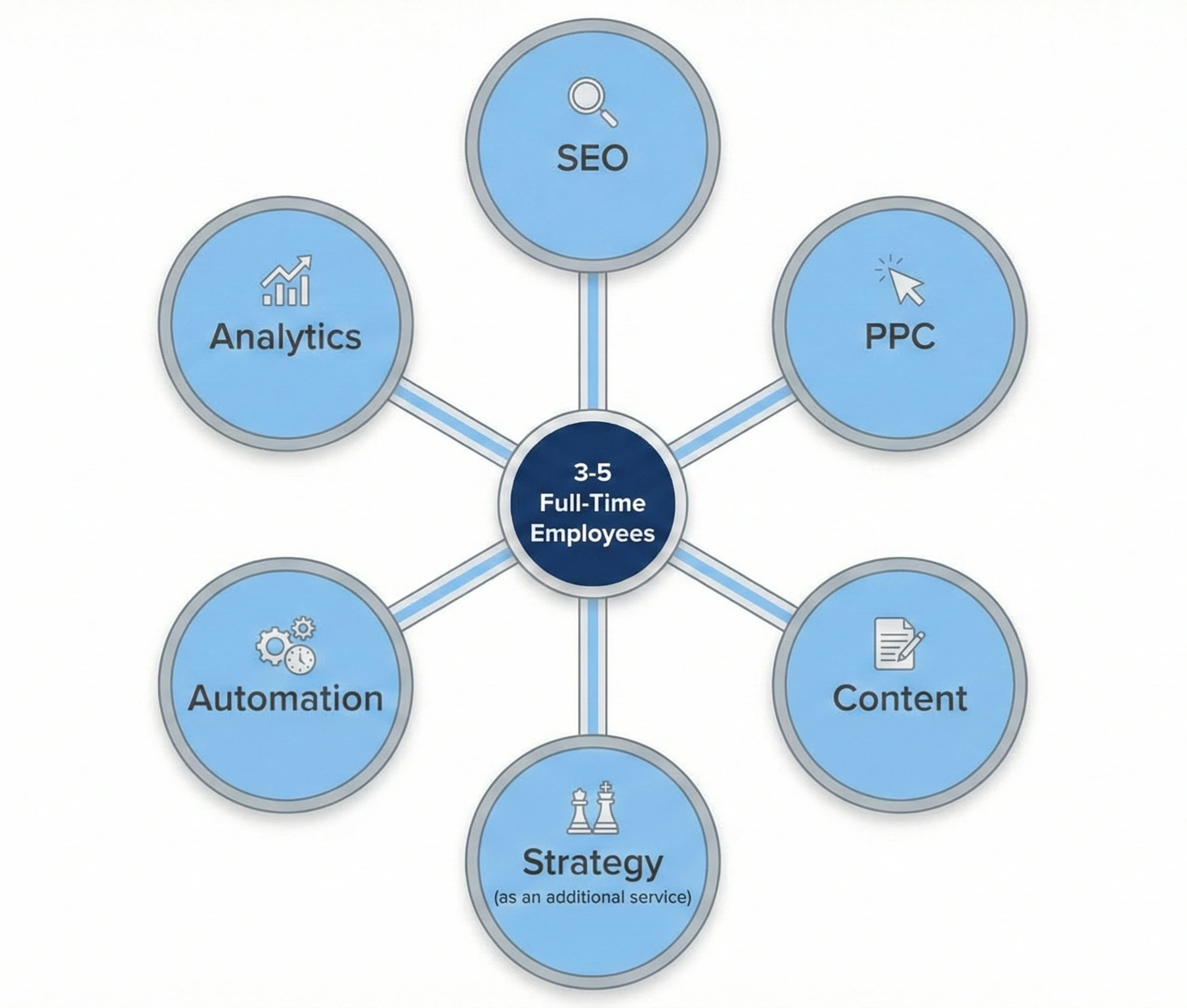
Agency Capacity Multiplication Model
The benefits are clear and proven. First, you can offer 5-7 different services with just 3-5 full-time employees by using white label partners for technical work like SEO, paid ads, or automation. Second, you launch new services in weeks instead of months, skipping the slow process of hiring and training. Third, by outsourcing 40-60% of delivery work, agencies keep profit margins at 18-22% instead of the 8-12% margins that come from traditional scaling.
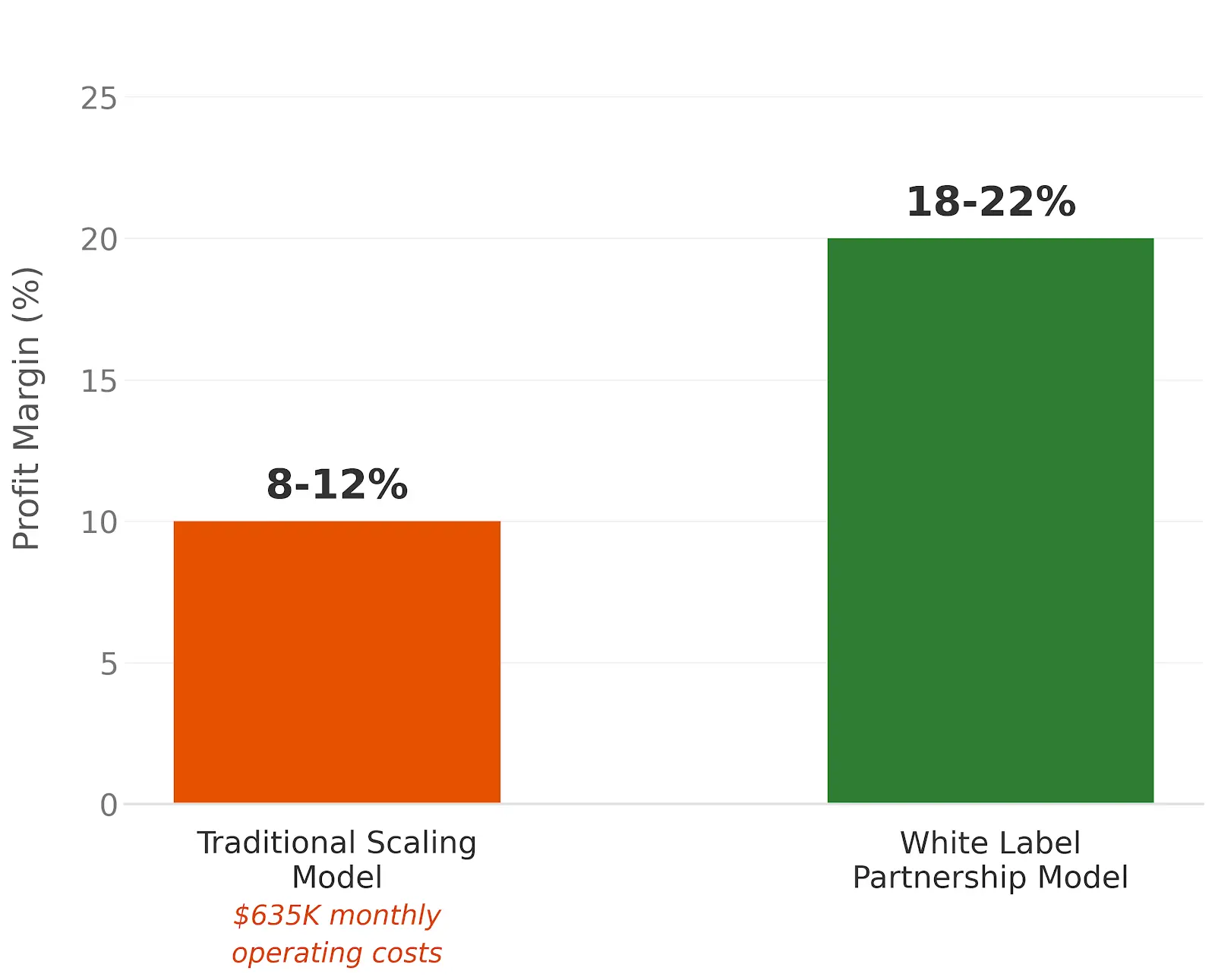
Traditional Scaling vs White Label Partnership: Profit Margin Comparison
Real Results
The results speak for themselves. One agency grew its client list 40% in one year without hiring anyone new, proving growth doesn't require bigger teams. Another boosted client results by 32% through white label experts, making their agency a retention machine. A documented case shows clients getting 50% more traffic from white label SEO partnerships, proof that quality stays high when specialists do the work.
The market backs this up. White label marketing software hit $5.3 billion in 2024 and will reach $12.3 billion by 2033, growing 9.8% annually. Marketing automation alone is a $4.2 billion market growing 38% per year. Agencies adopting white labels now are riding a wave, not fighting the tide.
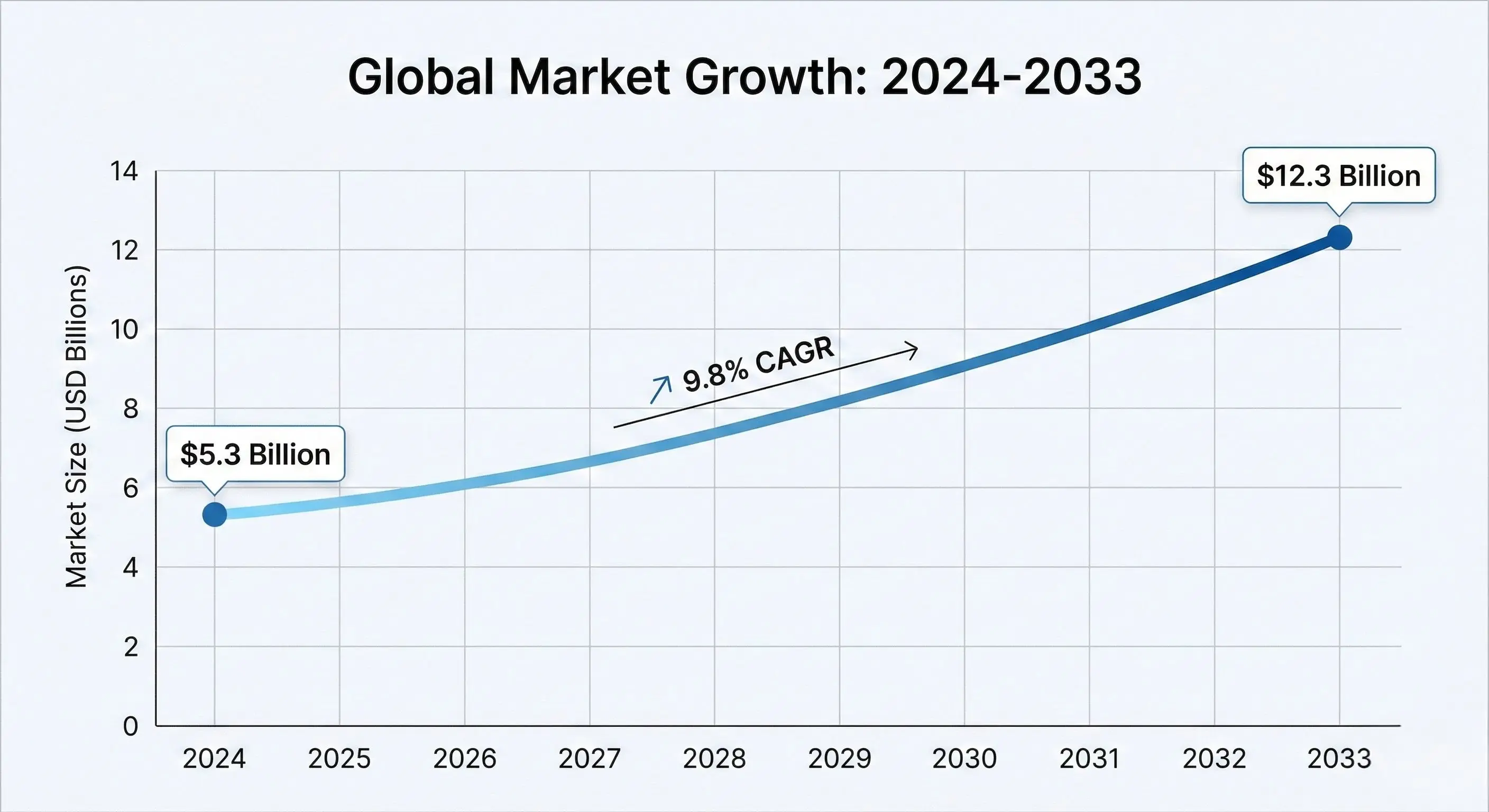
White Label Marketing Software Market Growth 2024-2033
The Integration Framework
Service Mapping & Partner Selection
Start by auditing what you do exceptionally well in-house versus what can be handled by specialists. Map your services into two buckets: strategic work where your unique insight drives results, and execution-heavy work that follows proven playbooks.
Partner selection requires strict criteria. Quality thresholds that match your standards, communication protocols that mirror your responsiveness, and turnaround SLAs that keep projects moving. Red flags include partners who can't demonstrate work samples at your quality level, show inconsistent communication patterns, or treat your projects like commodity work rather than collaborative partnerships.
Workflow Integration
Define precise handoff protocols that clarify where your internal team stops and white label partners begin. Build 2-3 quality gates into every workflow, review checkpoints before client delivery where your team validates work against brand standards.
The communication flow must stay clean: your team owns all client relationships while partners function as an invisible execution layer. Clients never experience partner interactions directly. They only see seamless delivery under your brand.
Culture Translation
Share comprehensive brand guidelines with partners that document your agency's voice, values, and quality expectations. Onboard white label teams like extended employees, not transactional vendors. Invest time in explaining what makes your agency different and why clients chose you. Establish weekly feedback loops to maintain alignment on quality standards and evolving client expectations.
Client Transparency
Most successful agencies position white label as a "specialist network" rather than outsourcing. Frame it as curating best-in-class experts to deliver superior results, putting outcomes over org charts. Show clients the results: traffic gains, conversion improvements, ROI increases, not the behind-the-scenes team structure.
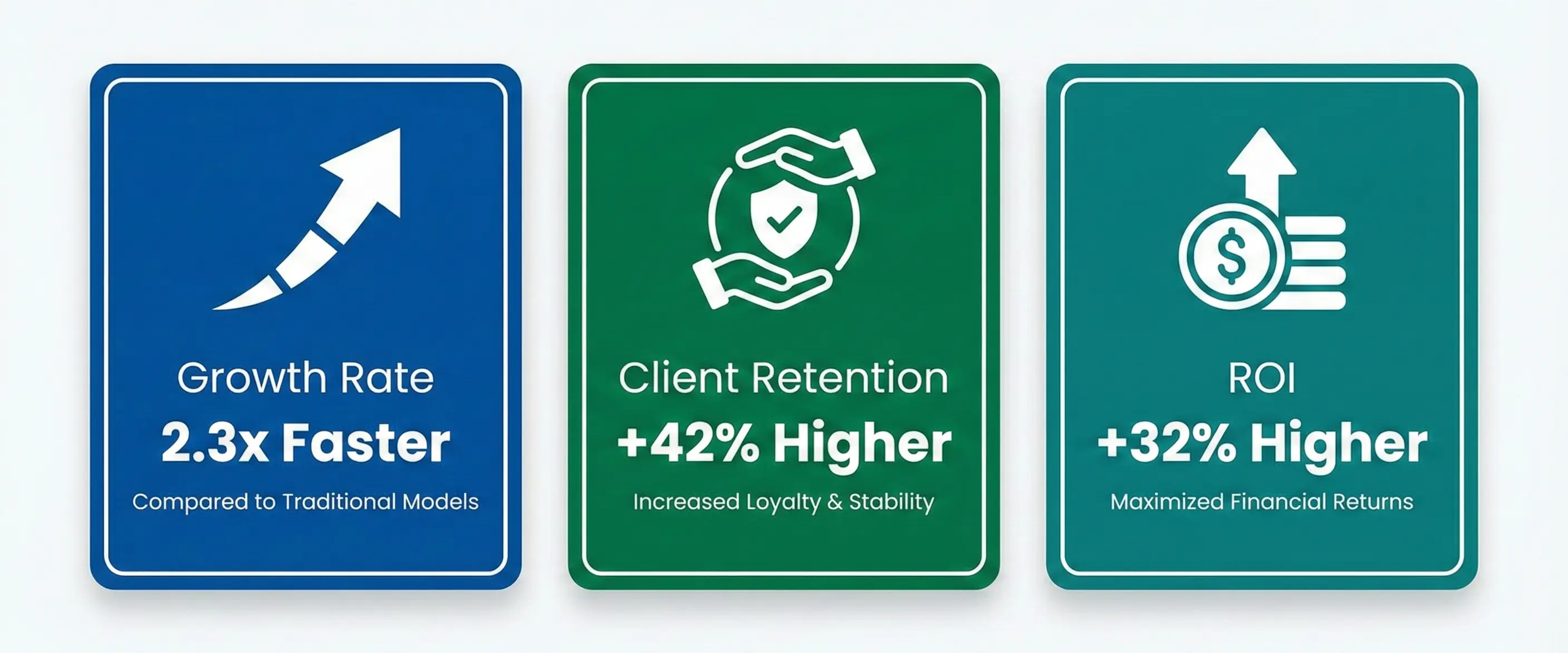
White Label Financial Performance Metrics
Common Pitfalls
Treating Partners Like Vendors
Transactional relationships produce inconsistent quality and weak results. When partners feel disposable, they deliver minimum effort instead of solutions aligned with your standards. The fix: invest in partner relationships like you develop internal talent, with regular check-ins, shared client context, and collaborative problem-solving.
No Quality Control Layer
Sending partner work directly to clients without review invites disasters. Even great partners occasionally miss context or brand standards. Always run deliverables through internal quality checks before client delivery. Build 2-3 review checkpoints into every workflow to catch issues early.
Over-Reliance on Single Partner
When one partner handles all work in a category, their capacity problems become your crisis. Diversify across 2-3 partners per service category. This creates redundancy, matches partner strengths to client needs, and reduces risk if relationships deteriorate.
Hiding White Label Use
Hiding partnerships out of fear creates trust issues when clients discover it later. Frame it confidently as strategic specialist curation. Position your white label network as a competitive advantage, curating experts so clients get 50% traffic increases and 32% ROI improvements they couldn't access otherwise.
The 2026 Landscape
AI Integration
The marketing automation white label market is growing 38% year-over-year, now valued at $4.2 billion. This surge reflects AI tools becoming core to white label offerings. Automated reporting, predictive analytics, and intelligent campaign optimization are now standard deliverables, and agencies partnering with AI-enabled white label providers gain competitive advantages that manual-only competitors cannot match.
Specialization Wins
Clients increasingly demand deep expertise in specific channels rather than surface-level generalists. White label partnerships enable agencies to offer specialist networks without hiring full-time experts in every discipline. An agency can now provide enterprise-grade SEO, programmatic advertising, and conversion rate optimization by curating best-in-class partners rather than building those capabilities internally.
Professionalization of Partnerships
Strategic planning frameworks for white label partnerships have become standard practice in 2026. Top agencies now dedicate resources to "partner success" roles, treating white label relationships like customer success programs with regular performance reviews, collaborative roadmaps, and continuous improvement cycles. White label services like link building, SEO, and PPC are no longer experimental. They are core components of modern agency tech stacks.
2026 marks the shift from white label as a "scrappy workaround" to a strategic imperative. The agencies thriving today treat white label partnerships as infrastructure, essential capacity architecture that enables growth without the operational burden of traditional scaling. Waiting to adopt this model means falling behind competitors already using these advantages.
Building Your Roadmap
Month 1: Audit & Select
Map your current services into "core" categories where your team excels and "augment" categories where white label partners can add capacity. Research 3-5 white label partners per category, checking quality samples, communication responsiveness, and cultural fit. Run pilot projects with your top 2 candidates to test real-world execution before committing.
Month 2: Integrate & Test
Build detailed handoff documentation and quality checklists that define where your team stops and partners begin. Onboard winning partners with brand and culture alignment sessions. Share your voice, values, and quality standards document. Run 2-3 client projects through the new workflow to identify friction points and refine processes.
Month 3: Scale & Optimize
Expand white label use to 40-60% of delivery volume while maintaining quality through your review checkpoints. Track margin improvements and client satisfaction metrics weekly to ensure the model delivers financial and relationship benefits. Refine processes based on feedback loops from both your team and partners.
Success Metrics
Monitor profit margin improvement with a target of 18-22% compared to traditional scaling . Track client retention rate, aiming for 42% higher versus baseline. Measure time-to-deliver for new service launches with a target under 30 days. Survey team satisfaction scores to ensure culture stays strong as you scale.
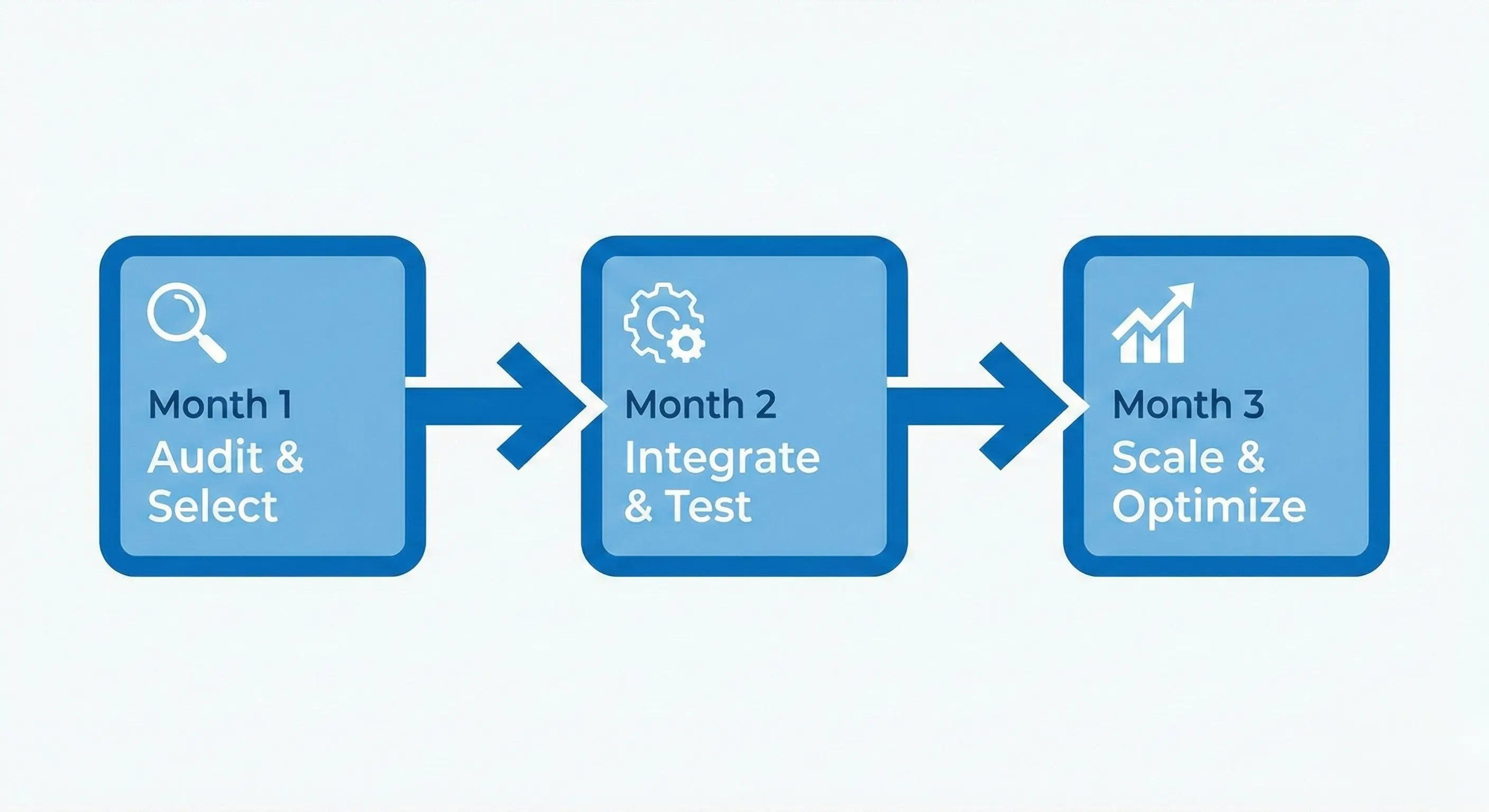
90-Day White Label Integration Roadmap
From Overhead to Growth Engine
White label partnerships multiply capacity while preserving what makes your agency unique. The agencies winning in 2026 understand this: white label is strategic infrastructure, not a workaround. The integration framework outlined here (audit your services, integrate partners seamlessly, align on culture, and deliver with quality gates) ensures you scale without losing your identity or compromising client relationships.
This is how agencies decouple revenue growth from headcount inflation and escape the hiring trap that compresses margins to 8-12% while white label adopters maintain 18-22%. The numbers validate this approach: agencies mastering white label partnerships grow 2.3 times faster and retain clients at rates 42% higher than competitors stuck in traditional scaling models. These are not marginal gains. They represent fundamentally different growth trajectories.
The $99.19 billion white label market exists because the model works when done correctly. Start with one service category, one trusted partner, and one pilot client. Treat white label integration like product development: iterate based on feedback, measure margin and retention metrics, and refine processes continuously. The agencies that treat this as strategic architecture rather than tactical outsourcing will dominate their markets while competitors burn cash on overhead.
References:
- AMRA and ELMA - TOP 20 WHITE LABEL MARKETING STATISTICS 2025
- Centripe - 11 Top White Label Marketing Software in 2026
- Murphy Consulting - Planning Your 2026 White Label Partnership
- Search Engine Land - What Successful Brand-Agency Partnerships Look Like in 2026
- Meticulosity - Case Studies in White-Label Success: Real-Life Stories
- Propellant Media - Why White Label Marketing is a Game-Changer for Agencies
- Financial Models Lab - White Label Marketing Agency Running Costs
- ALM Corp - White Label Link Building for Agencies: 2025-2026 Guide