
Shema
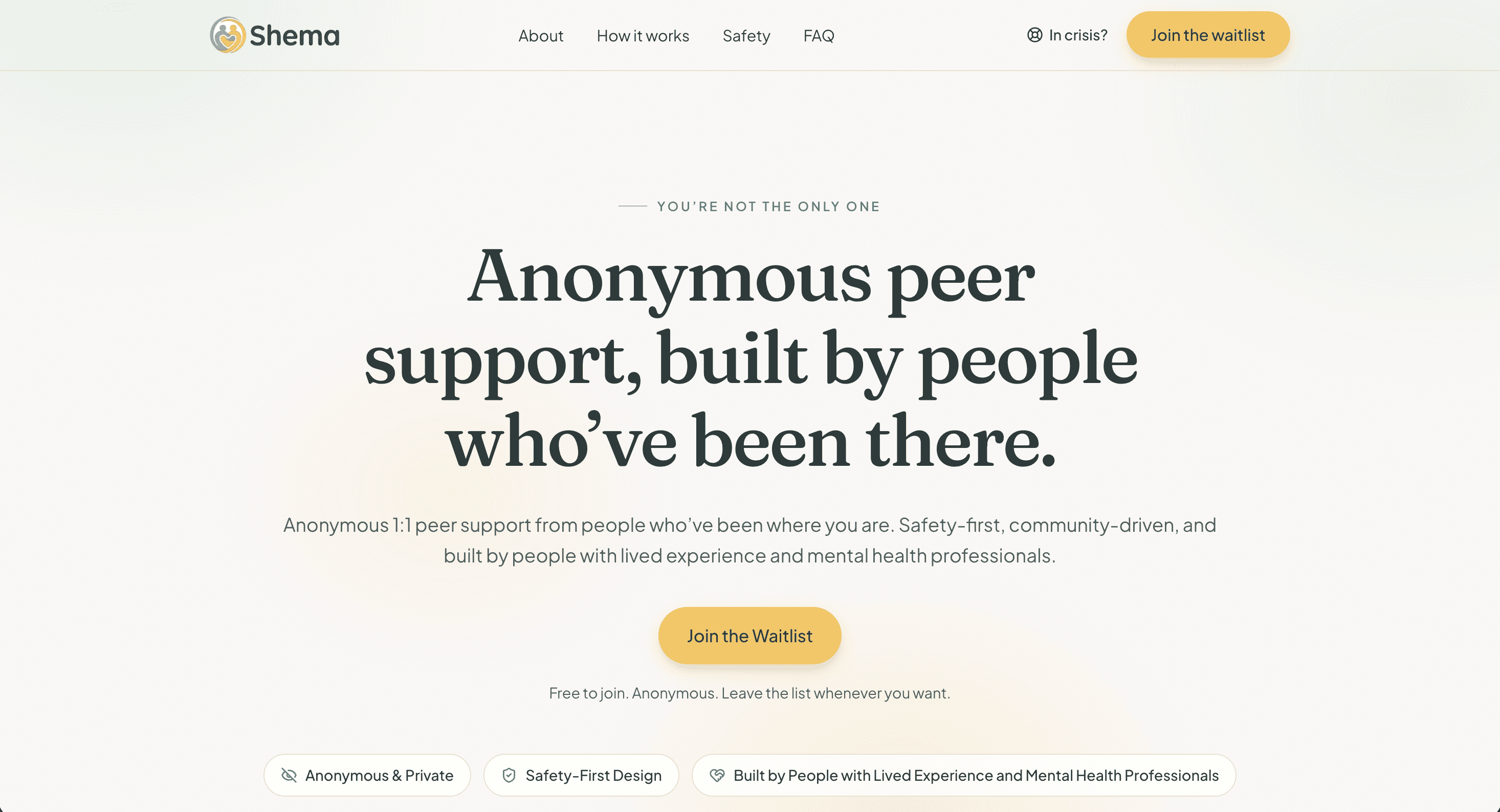
In DevelopmentAn anonymous peer-support platform built around thoughtful matching, private journaling, safe conversations, and access to professional support when needed.
Overview
Shema is an anonymous peer-support platform designed for people who want to be heard without having to reveal their identity or explain everything at once. It combines dual-preference matching, private journaling, text and voice conversations, community safety tools, and pathways to professional support. Shema is being developed as peer support, not therapy or a crisis service, with safety and clear boundaries built into the experience from the beginning.
Key results
The Problem
Many people sit between struggling alone and being ready or able to access professional care. Existing social platforms are too public and noisy, while traditional support options can feel expensive, intimidating, or difficult to enter. People need a low-pressure way to share what they are carrying, find someone with a compatible support style, and step away safely when a conversation is not right for them.
Our Solution
Shema creates a quiet, anonymous support environment where people choose both what they are going through and how they want to be supported. The platform uses those preferences to guide peer matching, then provides private conversations and journaling at the user's pace. Reporting, community rules, AI-assisted keyword monitoring, human escalation, and professional referral pathways create layers of protection without turning the product into a replacement for clinical care.
Challenges We Overcame
Designing for Anonymity and Trust
The experience must let people be honest without requiring real names, public profiles, or social links. Every interaction needs to communicate privacy clearly while still giving users enough context to make a thoughtful connection.
Dual-Preference Matching
Matching only on a person's situation is not enough. Shema also considers the kind of support someone wants, such as text or voice, direct or gentle communication, and the type of peer relationship that feels useful to them.
Safety in Sensitive Conversations
Peer support needs safeguards that are visible and actionable without making the product feel clinical or surveilled. Community rules, reporting, AI-assisted monitoring, escalation paths, and clear crisis guidance work together to protect participants.
Keeping Support Human and Low Pressure
Users can write privately before starting a conversation, continue a helpful connection, pause when needed, or seek a professional introduction. These options give people control over pace and intensity instead of forcing a single path through the product.
Results & Impact
Key Features
- Anonymous onboarding without real names or public social profiles
- Dual-preference matching based on situation and desired support style
- Private journal for writing before or between conversations
- Text and voice peer-support conversations at the user's pace
- Conversation history with the ability to continue a trusted connection
- Community guidelines, reporting, and blocking controls
- AI-assisted keyword monitoring with human escalation pathways
- Clear crisis resources and boundaries around what peer support can provide
- Professional-support introductions using the same preference-based approach
- Waitlist and early-access experience for the product under development